How to Turn a Game Idea into a Profitable Business: The 5-Step Process
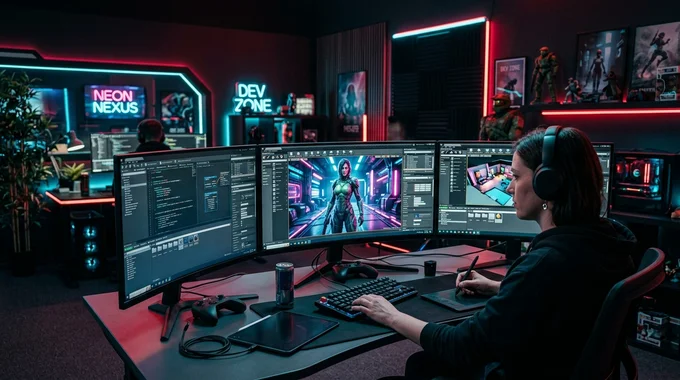
The global gaming industry generates over billion annually, outperforming the film and music industries combined. Yet, thousands of creative game concepts fail every year not because the idea was bad, but because the creator lacked a clear commercial and production roadmap.
Whether you want to build a casual mobile title, an educational 3D adventure, or a multiplayer action game, here is how successful studios turn creative game concepts into profitable, scalable digital products.
1. Game Design Document (GDD): Defining core loops, player motivation, visual style, and target audience.
2. Rapid Prototyping: Building a playable "greybox" prototype within 2-3 weeks to test core mechanics before heavy asset investment.
3. Production & Asset Pipeline: 3D character modeling, environment building, sound design, and netcode engineering.
4. Monetization & Retention Strategy: In-app purchases (IAP), season passes, rewarded ads, or premium paid downloads.
5. Publishing & Live-Ops: App Store / Google Play / Steam submission, analytics tracking, and content updates.
1. Choosing the Right Monetization Model
Before writing a single game mechanic, you need to know how the game will generate revenue:
- Free-to-Play (F2P) with Rewarded Ads: Ideal for hyper-casual and puzzle mobile games with high daily active users (DAU).
- In-App Purchases (IAP) & Cosmetics: Best for action, role-playing, and multiplayer games where players personalize avatars and unlock upgrades without pay-to-win friction.
- Premium Purchase / Buy Once: Effective for story-driven indie games, educational titles, and specialized simulation experiences on Steam and console.
- Subscription & Battle Pass: Provides predictable recurring revenue by rewarding consistent player engagement each season.
2. Why You Should Build a Playable Prototype First
One of the biggest mistakes first-time game entrepreneurs make is spending months creating high-resolution 3D art before proving the game is actually fun to play. By building a fast, low-fidelity prototype, you can test controls, camera angles, and gameplay physics with real players within weeks - saving tens of thousands in wasted production costs.
3. Partnering with a Full-Service Game Studio
Developing a commercial game requires a synchronized team: game designers, 3D character modelers, Unity/Unreal programmers, level designers, and audio engineers. Hiring and managing these individuals separately is time-consuming and expensive. Partnering with a specialized game studio gives you an integrated production pipeline from day one.
Our team develops full-cycle 2D, 3D, and multiplayer games across iOS, Android, PC, and Web. From hyper-casual hits to deep simulation titles, we handle concept design, game engineering, and store launch.
Have a game idea you want to bring to market? Explore our game development services or contact us to review your game concept.