UI/UX Design Trends You Can’t Ignore in 2026
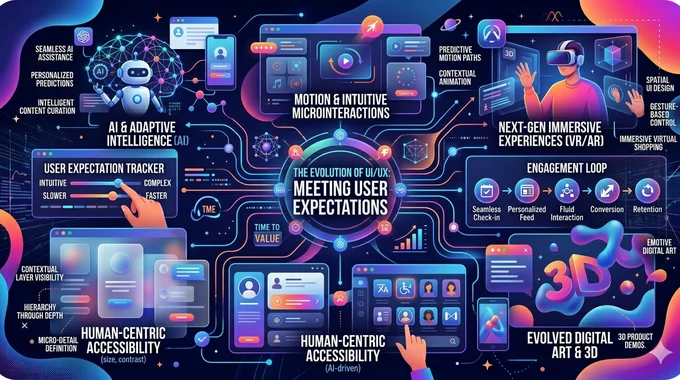
In today’s fast-moving digital world, user expectations are evolving faster than ever. A good-looking design is no longer enough, users demand seamless, intuitive, and engaging experiences. UI (User Interface) and UX (User Experience) design trends are shaping how businesses connect with their audience, improve retention, and drive conversions.
If you want your product, website, or app to stay competitive in 2026, these UI/UX trends are impossible to ignore.
f you’ve ever wondered what VR development actually means, what VR developers do, or whether this career has a future, this guide breaks it down in a simple way.
Minimalism with Purpose
Minimalism continues to dominate, but it’s no longer just about reducing clutter. It’s about intentional simplicity.
Key Features:
- Clean layouts with fewer distractions
- Strategic use of whitespace
- Focus on essential content
Why it matters:
Users prefer interfaces that are easy to navigate and quick to understand. Minimalism improves usability and reduces cognitive load.
Dark Mode & Dynamic Themes
Dark mode is now a standard feature across apps and platforms. But in 2026, it’s evolving into dynamic theming.
Key Features:
- Auto-switch between light/dark modes
- Custom theme personalization
- Reduced eye strain
Why it matters:
Users want control over their viewing experience, especially for long screen time.
High infrastructure costs for training facilities
- Travel and accommodation expenses for employees
- Making sure the experience runs smoothly
- Dependence on trainers for each session
- Safety risks in practical training environments
- Repeated costs for onboarding new employees
Because of these limitations, many organizations are now exploring digital training solutions that are scalable and cost-efficient.
Microinteractions & Animations
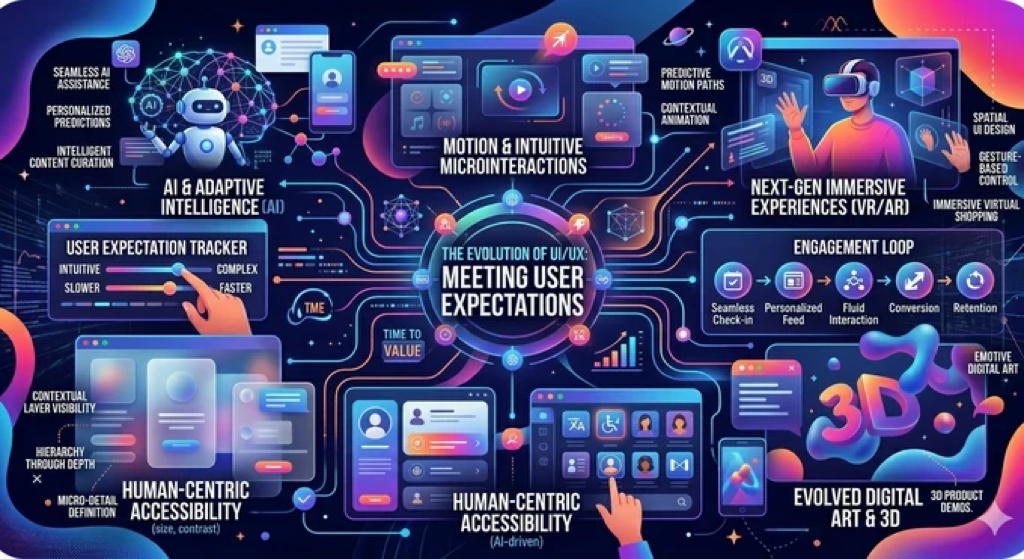
Small animations are making a big impact. Microinteractions guide users and make interfaces feel alive.
Examples:
- Button hover effects
- Loading animations
- Swipe feedback
Why it matters:
They improve engagement and provide visual feedback, making interactions more intuitive.
AI-Powered Personalization
Artificial Intelligence is revolutionizing UX by delivering hyper-personalized experiences.
Key Features:
- Personalized content recommendations
- Smart search and suggestions
- Adaptive interfaces
Why it matters:
Users expect experiences tailored to their preferences, behavior, and needs.
Voice & Conversational UI
Voice interfaces and chat-based interactions are becoming mainstream.
Key Features:
- Voice search integration
- Chatbots and virtual assistants
- Natural language processing
Why it matters:
It makes interaction faster, hands-free, and more human-like.
Glassmorphism & Neumorphism Evolution
Modern UI styles like glassmorphism continue to evolve with more usability focus.
Key Features:
- Frosted glass effects
- Soft shadows and depth
- Layered UI elements
Why it matters:
It creates visually appealing interfaces while maintaining clarity and hierarchy.
Accessibility-First Design
Accessibility is no longer optional, it’s essential.
Key Features:
- High contrast modes
- Screen reader compatibility
- Inclusive design practices
Why it matters:
Designing for everyone improves usability and expands your audience reach.
Mobile-First & Thumb-Friendly Design
With most users on mobile, designs are optimized for one-handed use.
Key Features:
- Bottom navigation bars
- Larger touch targets
- Gesture-based interactions
Why it matters:
Better mobile usability directly improves engagement and conversions.
Data Visualization & Storytelling
Users prefer information that is easy to understand and visually engaging.
Key Features:
- Interactive charts and graphs
- Infographics
- Visual storytelling
Why it matters:
It simplifies complex data and improves decision-making.
Immersive Experiences (AR/VR Elements)
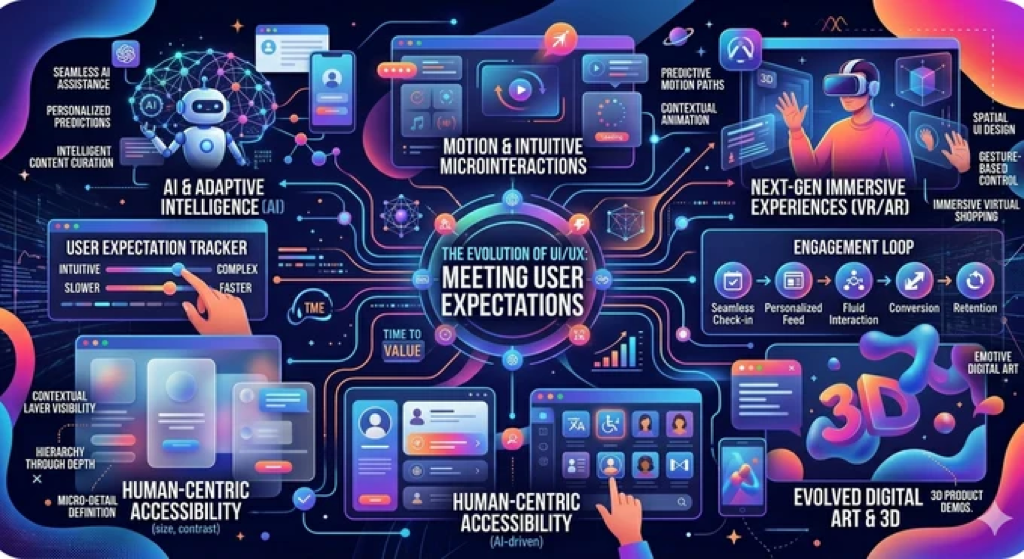
Augmented Reality (AR) and Virtual Reality (VR) are slowly becoming part of UI/UX.
Key Features:
- 3D product previews
- Virtual try-ons
- Interactive environments
Why it matters:
It creates memorable and engaging user experiences.
Conclusion
UI/UX design in 2026 is all about simplicity, personalization, and engagement. Businesses that embrace these trends will not only attract users but also retain them.
The key takeaway?
Don’t just design for looks, design for experience.