Understanding VR Development
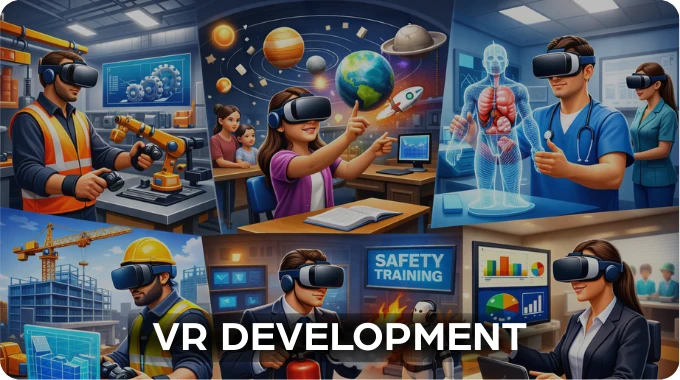
Virtual Reality (VR) is no longer just about gaming. It’s being used in factories, schools, hospitals, construction sites, and corporate training rooms. Companies are using VR to train people faster, safer, and smarter.
If you’ve ever wondered what VR development actually means, what VR developers do, or whether this career has a future, this guide breaks it down in a simple way.
What is VR Development?
VR development is the process of creating digital 3D worlds that people can enter using a VR headset. Inside these virtual worlds, users can look around, move, interact with objects, and complete tasks.
Think of it like stepping inside a video game, but instead of just playing for fun, you might be:
- Practicing how to repair a machine
- Learning safety procedures
- Operating heavy equipment
- Exploring a building before it’s built
Many companies work with a Unity game development company to build these interactive VR experiences because Unity is one of the most popular tools used for VR projects.
What Does VR Stand For?
VR stands for Virtual Reality. It creates a digital environment that feels real, even though it’s computer-generated.
You wear a headset, and your brain feels like you are inside that virtual space.
What Does a VR Developer Actually Do?
A VR developer is the person who builds these virtual experiences.
Their job includes:
- Creating interactive 3D environments
- Writing code so objects respond to users
- Making sure the experience runs smoothly
- Reducing motion sickness by optimizing performance
- Testing the application on different VR devices.
In simple terms, they combine coding, design, and problem-solving to make virtual worlds work properly.
Are VR Developers in Demand?
Yes, and demand is growing.
VR is being used in:
- Manufacturing training
- Construction safety
- Medical simulations
- Education platforms
- Logistics and warehouse operations
Instead of training people on real machines (which can be risky or expensive), companies use VR. Because of this shift, businesses often hire or partner with a custom software development company to build tailored VR solutions.
What Skills Do You Need to Become a VR Developer?
If someone wants to get into VR development, here are the key skills:
- Knowledge of Unity or Unreal Engine
- Programming skills (C# or C++)
- Basic understanding of 3D environments
- Problem-solving mindset
- Ability to optimize performance

Experience in 3D game development makes it easier to move into VR because both use similar tools and logic.
The good news? You don’t always need a specific degree. Strong projects and a solid portfolio matter more.
What Coding Language Does VR Use?
The most common languages used in VR are:
- C# (mainly with Unity)
- C++ (mainly with Unreal Engine)
Is C++ Used in VR?
Yes. C++ is heavily used in high-performance VR simulations, especially in enterprise or advanced projects.
What Software Is Used in VR Development?
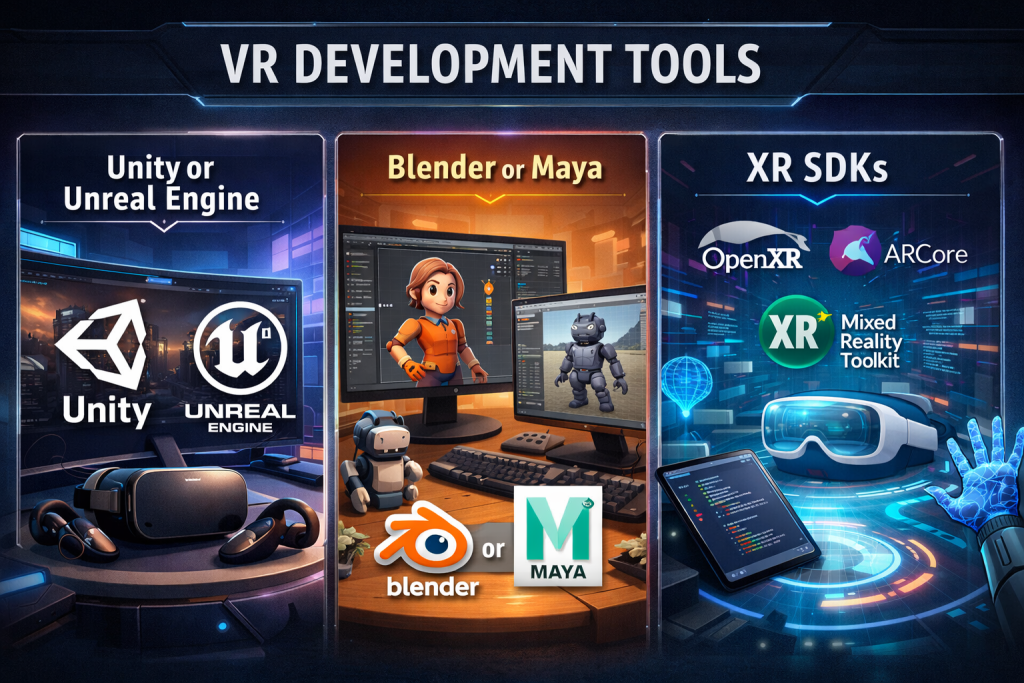
VR development usually involves a mix of tools:
- Unity or Unreal Engine (for building the experience)
- Blender or Maya (for 3D models)
- XR SDKs (for connecting to VR headsets)
A professional software development company in India often combines all these tools to deliver complete VR solutions for businesses.
Is VR the Same as AI?
No.
VR creates immersive environments. AI creates intelligent behavior and decision-making.
However, they can work together. For example, AI can make virtual characters behave more realistically inside a VR training simulation.
Is VR Safe?
For most people, yes.
When built properly with good performance and smooth frame rates, VR is safe to use. Sessions should be balanced and not too long. Most professional VR systems are designed with comfort in mind.
Can VR Replace Reality?
Not really, and it’s not meant to.
VR is used to simulate situations that are:
- Dangerous
- Expensive
- Hard to access
- Rare but critical (like emergency drills)
It helps people prepare before they face the real situation.
Careers in VR
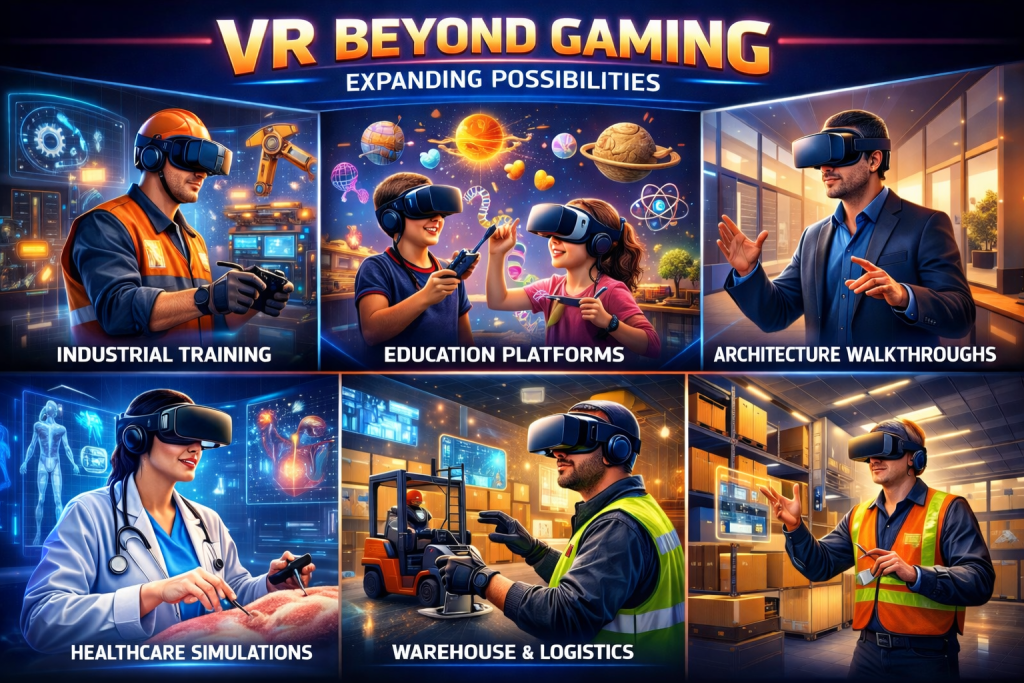
VR is not limited to gaming. It is used in:
- Industrial training
- Education platforms
- Architecture walkthroughs
- Healthcare simulations
- Warehouse and logistics systems
It is also growing in the metaverse space, where companies look for a reliable metaverse development company to build immersive digital environments.
What Is the Salary of a VR Developer in India?
laries vary based on experience:
- Entry level: ₹4-6 LPA
- Mid-level: ₹8-15 LPA
- Senior level: ₹18+ LPA
With experience and strong project exposure, income can grow significantly.
VR in Education and Industry
VR is becoming popular as an AR education platform and industrial training solution.
In industries like manufacturing, energy, and logistics, VR helps teams:
- Practice equipment handling
- Learn safety procedures
- Run emergency simulations
- Improve coordination
It reduces risk and improves confidence before real-world tasks.
How MEPROTECH Can Help
MEPROTECH builds scalable VR solutions for enterprises. As a company experienced in immersive technology, mobile solutions, and enterprise systems, we help businesses adopt VR the right way.
Our services include:
- Custom VR training modules
- Industrial simulations
- Integration with enterprise platforms
- Cross-platform deployment
As a growing mobile app development company and immersive tech provider, we focus on practical, results-driven VR solutions rather than experimental concepts.