WebAR vs Native Apps: Which One Should You Build?
Should you build a WebAR experience or a Native App?
In today’s fast-evolving digital landscape, businesses are constantly searching for innovative ways to engage users. Augmented Reality (AR) has emerged as a powerful tool, but when it comes to implementation, a key question arises:
Let’s break it down.
What is WebAR?

WebAR (Web-based Augmented Reality) allows users to access AR experiences directly through their browser, no app download required.
Key Features:
- Works via a simple link or QR code
- No installation needed
- Accessible on most smartphones
- Instant user engagement
What are Native Apps?
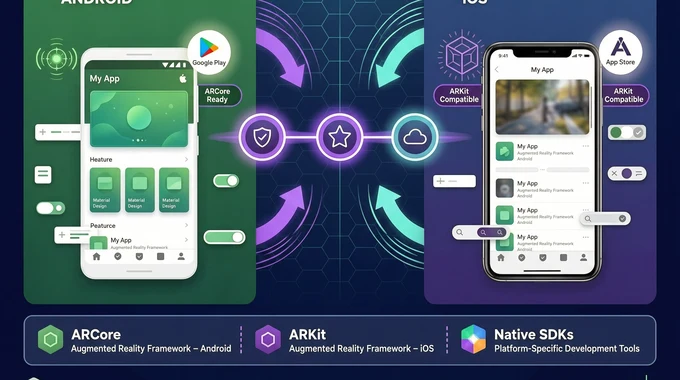
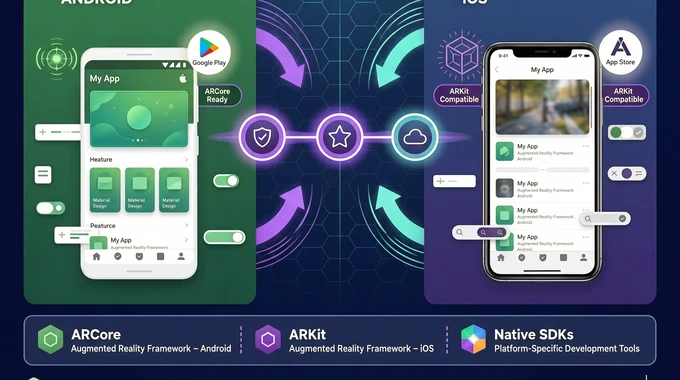
Native apps are mobile applications built specifically for platforms like Android or iOS. They can integrate advanced AR features using frameworks like ARCore or ARKit.
Key Features:
- Requires download and installation
- High performance and advanced capabilities
- Better access to device hardware
- Ideal for long-term engagement
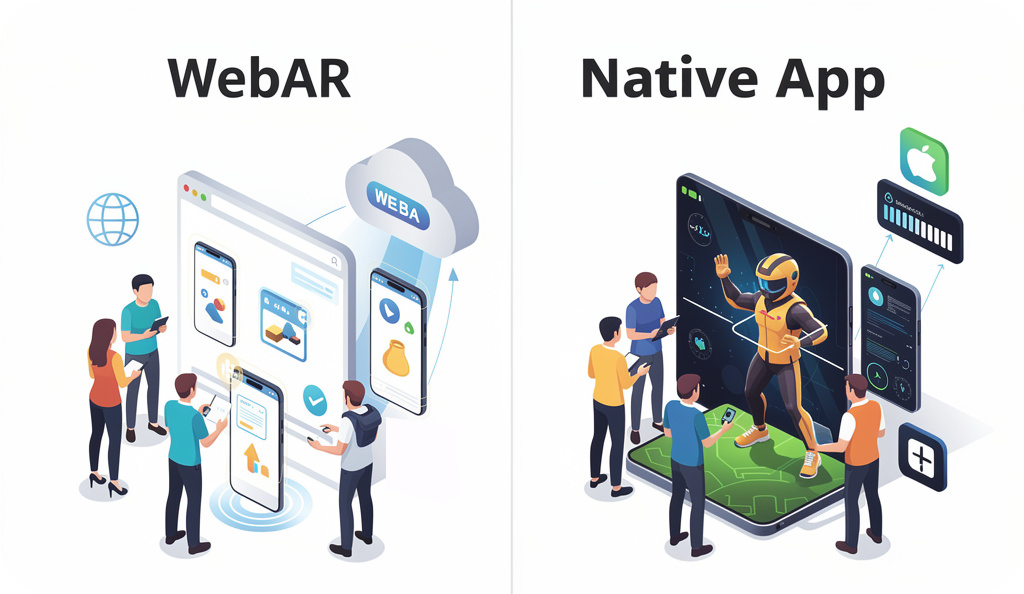
WebAR vs Native Apps: Key Differences
1. User Accessibility
- WebAR: Instant access, no friction
- Native Apps: Requires download, which may reduce conversions
If you want quick reach and higher engagement, WebAR wins.
2. Performance & Capabilities
- WebAR: Limited compared to native apps
- Native Apps: Superior graphics, tracking, and performance
For complex AR experiences, native apps are better.
3. Development Cost & Time
- WebAR: Faster and more cost-effective
- Native Apps: Higher cost and longer development time
WebAR is ideal for startups and marketing campaigns.
4. User Experience
- WebAR: Lightweight and convenient
- Native Apps: More immersive and feature-rich
Choose based on how deep you want the interaction.
5. Maintenance & Updates
- WebAR: Easy updates (just update the website)
- Native Apps: Requires app store updates
WebAR offers more flexibility.
When Should You Choose WebAR?
Go for WebAR if you want:
- Marketing campaigns and promotions
- Product previews (e.g., try-before-you-buy)
- QR-based experiences (packaging, ads)
- Maximum reach with minimal effort
When Should You Choose Native Apps?
Choose Native Apps if you need:
- Advanced AR features (gaming, simulations)
- Long-term user engagement
- High-performance graphics
- Offline functionality
The Smart Approach: Hybrid Strategy
Many brands today are combining both:
- Use WebAR for acquisition (easy entry point)
- Use Native Apps for retention (deeper engagement)
This creates a seamless user journey from discovery to loyalty.
Conclusion
There’s no one-size-fits-all answer.
WebAR is perfect for accessibility, speed, and marketing impact.
Native apps are ideal for performance, depth, and long-term engagement.
Your choice depends on your goals, budget, and audience behavior.
Ready to turn your ideas into immersive AR experiences?
Let’s build something your audience won’t just see, but experience.
Whether you need a fast WebAR campaign or a powerful native app, we can help you create impactful digital experiences.Contact us today and bring your vision to life!