The Best Tools for Unity Game Development in 2026
 By Miheer Jasani
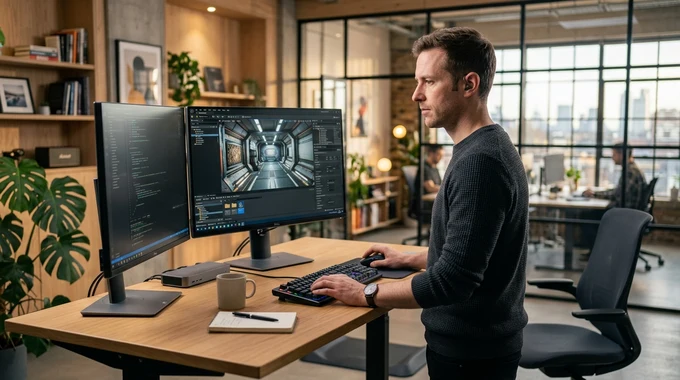
Unity remains the world's most versatile real-time engine, powering hit commercial mobile titles, expansive PC adventures, enterprise VR training simulators, and interactive architectural visualizers. However, shipping a polished, top-earning commercial product requires far more than installing the base editor. If you are building a team, read our guide to hiring Unity developers.
Professional game studios rely on a carefully curated ecosystem of production tools, headless command-line utilities, memory profilers, visual shader systems, and asset optimization pipelines to maintain high frame rates, streamline team collaboration, and launch bug-free releases.
Whether you are building an indie game or enterprise simulation, partnering with a veteran Unity game development company like MEPROTECH ensures your project leverages the industry's most advanced toolchain from day one, minimizing technical debt and maximizing performance across mobile, desktop, and VR platforms.
Automation-First Pipelines: Leading studios integrate headless command-line tools and continuous integration (CI/CD) pipelines to automate asset bundling, smoke testing, and cross-platform compilation.
Universal Render Pipeline (URP): URP has solidified as the multi-platform standard, delivering high battery efficiency, clean visual post-processing, and flexible shader graphs across mobile, standalone VR, and PC.
Proactive Memory & Frame Profiling: Running native memory profilers and frame debuggers from pre-production prevents emergency optimization crunches before app store submission.
Studio Partnership Advantage: Working with a full-cycle custom game development agency gives you instant access to enterprise-tier Unity plugins, optimized shader libraries, and senior engineers with shipped title experience.
1. The Four Essential Tooling Pillars in Modern Game Production
To produce a commercially competitive game or interactive simulation, professional studio workflows are organized across four essential technical disciplines:
- Rendering & Visual Shader Authoring: Visual node-based shader systems allow technical artists to create stylized water, interactive foliage, and dynamic lighting effects without hand-writing low-level HLSL graphics shaders.
- Performance Diagnostics & Memory Profiling: Advanced memory profilers and GPU frame debuggers monitor draw calls, vertex counts, texture memory, and garbage collection allocations in real time on physical mobile and VR devices.
- Version Control & Large Binary Asset Workflows: Enterprise Git systems paired with Git LFS (Large File Storage) enable multi-disciplinary teams of 3D artists, sound designers, and programmers to collaborate smoothly without corrupting large scene files.
- Headless CI/CD & Build Automation: Modern command-line interfaces allow automated build servers to compile, package, and run automated regression tests on daily builds without tying up developer workstations.
2. Comparing Essential Unity Production Tools by Studio Function
The table below summarizes the key tool categories professional studios utilize to streamline game engineering:
| Tool Category | Primary Production Function | Core Studio Benefit | Commercial Business Impact |
|---|---|---|---|
| Automated Build Pipelines | Headless compilation, automated asset bundling, and smoke testing | Eliminates manual compilation downtime for engineers | Cuts build distribution cycles from days to hours |
| Device Profiling Suites | Real-time memory tracking, draw-call analysis, and GPU load monitoring | Pinpoints frame-rate drops and memory leaks early | Prevents store submission rejections and negative user reviews |
| Visual Node Scripting | Rapid interaction logic and state machine prototyping | Allows game designers to iterate mechanics without waiting for core programmers | Speeds up prototype validation |
| Addressable Asset Systems | Dynamic on-demand content loading and asset streaming | Reduces initial application download size below app store cellular limits | Increases user install completion rates on mobile devices |
| Automated Retopology & LODs | Generating multi-resolution 3D mesh tiers automatically | Ensures smooth rendering across low-end and high-end hardware | Expands the addressable market of compatible player devices |
3. Why Early Performance Profiling Saves Thousands of Dollars
One of the costliest errors game founders make is deferring optimization until the final weeks before launch. A project running at 60 frames per second on a high-end development computer can easily drop to an unplayable 15 frames per second when deployed to a mid-tier smartphone or standalone VR headset.
- Garbage Collection Mitigation: Managing memory allocations inside game update loops prevents recurring micro-stutters that ruin action gameplay and cause players to uninstall.
- Draw Call Batching: Utilizing GPU instancing and texture atlasing combines hundreds of separate 3D mesh rendering calls into single GPU instructions, preserving mobile battery life and reducing thermal throttling.
- Texture Compression Standards: Leveraging modern compression formats (such as ASTC) preserves crisp visual fidelity while reducing overall memory footprints by over 70%.
Related reading: Top 5 Tools to Start Game Development in 2026, How AI Tools in Unity Speed Up Game and VR Development and How to Turn a Game Idea Into a Profitable Business.
4. Why Partner with MEPROTECH for Unity Game Development
Navigating the vast ecosystem of Unity packages, cross-platform plugins, and optimization tools requires deep technical craftsmanship. MEPROTECH is a trusted game development and spatial engineering studio that turns ambitious creative visions into commercial successes.
Here is why founders, publishers, and corporate innovators choose MEPROTECH:
- Mastery of Modern Unity Architecture: We write clean, modular, and maintainable C# code built on industry-standard design patterns, ensuring your project scales cleanly from prototype to live operations.
- Proven Multi-Platform Experience: We have successfully developed and launched interactive 2D and 3D titles across iOS, Android, PC, WebGL, Meta Quest, and Apple Vision Pro.
- Comprehensive In-House 3D Studio: Our modeling and animation team crafts optimized, low-poly 3D assets and custom visual effects designed specifically to hit peak frame rates on target hardware.
- Transparent Sprints & Fixed Pricing: You receive weekly playable builds, transparent task tracking, and milestone-based billing with zero unexpected expenses.
- Full Intellectual Property Ownership: You retain complete legal ownership of all source code, art assets, and project files from day one.
5. Frequently Asked Questions
Which render pipeline is best for our Unity project?
For most commercial projects targeting mobile, standalone VR, WebGL, or mid-tier PC, the Universal Render Pipeline (URP) is the recommended standard. It provides the best balance of visual quality, performance, and battery efficiency across devices.
Can MEPROTECH help optimize an existing Unity project that has low frame rates?
Yes. We frequently conduct technical performance audits on existing Unity projects. Our engineers profile CPU/GPU bottlenecks, eliminate memory leaks, batch draw calls, and optimize 3D assets to achieve smooth, consistent frame rates.
What does a full-cycle game development engagement with MEPROTECH look like?
We manage your project from start to finish: game design document (GDD) creation, prototyping, 3D asset modeling, gameplay programming, audio design, quality assurance testing, and app store or Steam submission.
How do we start a project with MEPROTECH?
Simply reach out through our contact page. We will schedule a free discovery call to review your game concept, discuss target platforms, and deliver a detailed technical roadmap with milestone estimates.
Leverage MEPROTECH senior Unity engineering, cutting-edge production tooling, and rigorous performance optimization to bring your game vision to life.
Ready to build your next title? Explore our custom game development services or schedule a consultation with MEPROTECH today.